Dynasty Warriors: Origins is the boldest move of Koei Tecmo for game series Dynasty Warriors over the past two decades. Instead of continuing with traditional numbering (from Dynasty Warriors 2 The year 2000 arrived Dynasty Warriors 9), the developer proactively abandoned the numbering system and chose the name “Origins” as a clear statement: this is not just a sequel, but a new starting point for the franchise.
Current Dynasty Warriors capital based Romance of the Three Kingdomsone of the most far-reaching cultural products in East Asia. For more than 20 years, this game series has been associated with the “1 vs 1,000” action experience – where players transform into famous generals, charging alone in the middle of a large battlefield, cutting down thousands of soldiers in the blink of an eye, also known as “Musou”.
This formula was so successful that it was “cloned” to many other brands such as Hyrule Warriors, Fire Emblem Warriors nice One Piece: Pirate Warriors.
However, that prolonged stability also becomes a “double-edged sword”. Dynasty Warriors often criticized for repetitive gameplay, lack of innovation, and past attempts at reform (especially in Dynasty Warriors 9) did not receive widespread support.
In that context, Dynasty Warriors: Origins was born as a difficult problem: renewing the experience, but not losing the core identity. Whether Koei Tecmo will succeed in this challenge, let's see.
SUMMARY OF CONTENTS
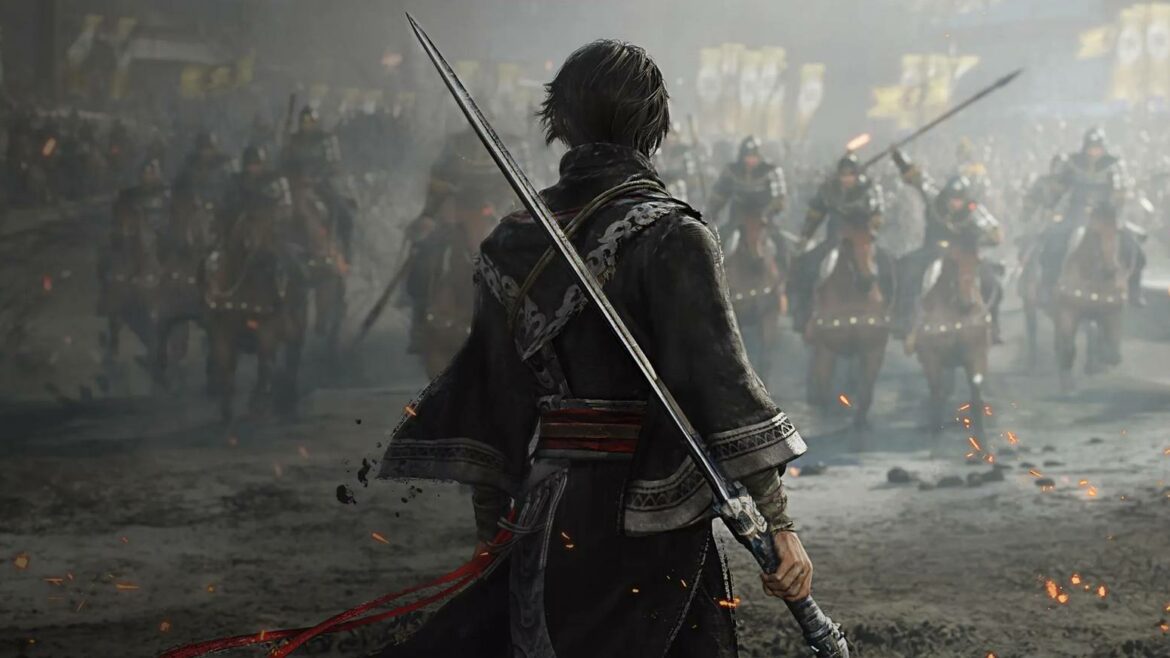
Dynasty Warriors: Origins Set in China at the end of the Eastern Han Dynasty, a period when society fell into chaos, the royal court weakened and military forces began to rise. Unlike the previous parts, which revolved around many familiar famous generals, the game follows a completely new main character – a wandering fighter who has lost his memories, unknown background or past.
In the journey of survival amid chaos, the main character is gradually caught up in major conflicts and becomes the object of attention from many forces. Depending on the player's choice, the character will serve one of three major factions: Wei, Shu or Wu. Each decision not only affects personal relationships, but also shapes the direction of the story and the character's role in the flow of history.
During that process, players witnessed and directly participated in many important events of the Three Kingdoms period, meeting familiar historical figures such as Cao Cao, Liu Bei, Sun Quan, Guan Yu or Truong Phi. However, these events are seen through the main character's perspective, instead of recreating history in the traditional way.
Along with large-scale battles, the plot gradually reveals clues related to the main character's lost memories and true identity. Questions surrounding the reasons characters possess outstanding fighting abilities, as well as the connection between them and historical events, become the central axis of the story.
YOU WILL LIKE
The main character is “unfamiliar”!
The biggest – and most controversial – change of Dynasty Warriors: Origins lies in the approach to the plot. The game no longer allows players to freely choose Guan Yu, Zhang Fei or Trieu Van from the beginning. Instead, you play a completely new character, a wandering warrior during the Three Kingdoms period, lost his memories and caught up in the spiral of great forces competing for power.
The main character can choose to serve Wei, Shu or Wu, and from this decision, the plot will turn in different directions. Not only does the historical outcome change, but your relationships, allies, and enemies are reshaped. Compared to the “buffet table” storytelling of previous parts – where players choose a champion, enter battle, then switch to another character with almost no cohesion – this new approach is more like a “meal with a menu” that is clear, coherent, and has a climax.
For newbies, this is a big plus. They don't need to understand each Three Kingdoms character from the beginning but can still follow the story through the main character's personal journey. For longtime fans, uncovering the mystery of the past, lost memories, and this character's true role in familiar history also creates a new layer of appeal.
The biggest change of Dynasty Warriors: Origins lies in the approach to the plot
Focusing only on a single character is forced Dynasty Warriors: Origins had to completely restructure the character development system. Instead of each champion being associated with a fixed weapon, weapons now become “open resources”, gradually unlocked during gameplay.
Players can choose from 8 basic weapon types, and expand to about 10 types later, including the Phuong Thien Hoa Halberd – the symbol associated with Lu Bu. Each weapon has a different set of moves, tempo, and combat feel, allowing players to experiment and change their gameplay without creating a new character.
More noteworthy is that the experience system is designed to be very “breathable”. When using a weapon, other weapons still receive partial experience. If you change a weapon midway, its level will quickly be pulled closer to the general level, avoiding the feeling of having to “plow” from the beginning. This is a small but extremely important improvement, helping the game maintain a stable pace and minimize boredom.
Intense combat system!
Dynasty Warriors Traditionally it's not a game series that focuses on 1v1 matches. However, Dynasty Warriors: Origins Boldly upgraded the combat system, adding mechanisms such as accurate parry, timely dodging, and calculated counterattacks.
Confrontations with famous generals, such as Lu Bu at Ho Lao Pass, have a very different feel than before. Instead of just “spamming moves” among the “sea of soldiers”, players must observe, react and take advantage of loopholes, making these matches closer to modern action games. Difficulty also directly affects AI behavior, creating distinct differences between game modes.
Dynasty Warriors Traditionally it's not a game series that focuses on 1v1 matches. However, Dynasty Warriors: Origins Boldly upgraded the combat system
Despite many changes, Dynasty Warriors: Origins without forgetting the core of the game series. The feeling of entering the battlefield alone, sweeping away hundreds, thousands of soldiers is still “the heart of the experience”.
Players can choose allied generals before each battle, and even control them for a short time to unleash special skills. In the early game, switching to Guan Yu and activating the ultimate Musou – with its powerful visual effects, the screen turning black and white and enemies being wiped out in an instant – is a very impressive moment!
When progressing further, the main character also “unlocks” similar skills, combined with the specific moves of each weapon. The fast pace, large scale and feeling of “absolute dominance” are still preserved.
YOU WILL HATE
The scope of the plot is limited, creating a feeling of “unfinished”
Despite the name Origins and was built as a new beginning for the brand, Dynasty Warriors: Origins only exploits the historical period up to the battle of Xich Bich, an important milestone but not the final climax of the Three Kingdoms period. This makes the overall story line somewhat incomplete, especially for players who are familiar with the entire historical process from the conflict between the Three Kingdoms, until Jin unified the world.
With the new storytelling structure, focusing on a main character with a clear personal journey, stopping at Red Cliff makes the character development process not yet “mature”. Many important questions – about the past, the protagonist's true role in history, as well as the long-term consequences of the player's decisions – remain unexplored.
This feeling is even more evident when the game invests a lot in building faction choices and relationships, but does not have enough space and time for them to develop to a satisfactory conclusion.
Of course, it's possible that this was a calculated decision by the developer, to pave the way for future sequels or expansions. However, at the present time, players who complete the game still find it difficult to avoid the feeling that they have just finished a long chapter, not the whole story.
With a new storytelling structure, focusing on a main character with a clear personal journey, stopping at Red Cliff makes the character development process not yet “mature”.
The trade-off in “identity” may make longtime fans dislike it
The move to a “single main character” model helps Dynasty Warriors: Origins becomes more coherent and accessible, but at the same time makes a clear trade-off. In previous installments, each martial artist not only differs in appearance but also has a unique fighting style, weapon, skill set, and tempo. This variety is one of the factors that keeps players coming back to try out different characters.
LIVE Originsalthough the open weapon system partly compensates for that deficiency, the feeling of “transforming into a famous general” is still significantly reduced. Guan Yu, Zhang Fei or Trieu Van now mainly exist as support allies or short-term controllable characters, rather than as the center of the experience. For those who have been with the game series for a long time, this may be a regrettable change for them.
In other words, Dynasty Warriors: Origins requires players to place more emphasis on the experience of playing a new character, instead of the satisfaction that comes from choosing and mastering dozens of familiar generals.
The move to a single protagonist model helps Dynasty Warriors: Origins becomes more coherent and accessible, but at the same time makes a clear trade-off
To provide the best experiences, we and our partners use technologies like cookies to store and/or access device information. Consenting to these technologies will allow us and our partners to process personal data such as browsing behavior or unique IDs on this site and show (non-) personalized ads. Not consenting or withdrawing consent, may adversely affect certain features and functions.
Click below to consent to the above or make granular choices. Your choices will be applied to this site only. You can change your settings at any time, including withdrawing your consent, by using the toggles on the Cookie Policy, or by clicking on the manage consent button at the bottom of the screen.
Functional
Always active
The technical storage or access is strictly necessary for the legitimate purpose of enabling the use of a specific service explicitly requested by the subscriber or user, or for the sole purpose of carrying out the transmission of a communication over an electronic communications network.
Preferences
The technical storage or access is necessary for the legitimate purpose of storing preferences that are not requested by the subscriber or user.
Statistics
The technical storage or access that is used exclusively for statistical purposes.The technical storage or access that is used exclusively for anonymous statistical purposes. Without a subpoena, voluntary compliance on the part of your Internet Service Provider, or additional records from a third party, information stored or retrieved for this purpose alone cannot usually be used to identify you.
Marketing
The technical storage or access is required to create user profiles to send advertising, or to track the user on a website or across several websites for similar marketing purposes.
To provide the best experiences, we use technologies like cookies to store and/or access device information. Consenting to these technologies will allow us to process data such as browsing behavior or unique IDs on this site. Not consenting or withdrawing consent, may adversely affect certain features and functions.
Functional
Always active
The technical storage or access is strictly necessary for the legitimate purpose of enabling the use of a specific service explicitly requested by the subscriber or user, or for the sole purpose of carrying out the transmission of a communication over an electronic communications network.
Preferences
The technical storage or access is necessary for the legitimate purpose of storing preferences that are not requested by the subscriber or user.
Statistics
The technical storage or access that is used exclusively for statistical purposes.The technical storage or access that is used exclusively for anonymous statistical purposes. Without a subpoena, voluntary compliance on the part of your Internet Service Provider, or additional records from a third party, information stored or retrieved for this purpose alone cannot usually be used to identify you.
Marketing
The technical storage or access is required to create user profiles to send advertising, or to track the user on a website or across several websites for similar marketing purposes.


 Loading ...